Surface finishing has evolved from a labor-intensive job to an engineering process driven by precision. In today’s world of manufacturing coating quality is directly affecting the durability, corrosion resistance and overall product perception. As standards worldwide tighten and customers expect flawless quality finishes, many companies are turning to robotics for painting for greater control and consistency.
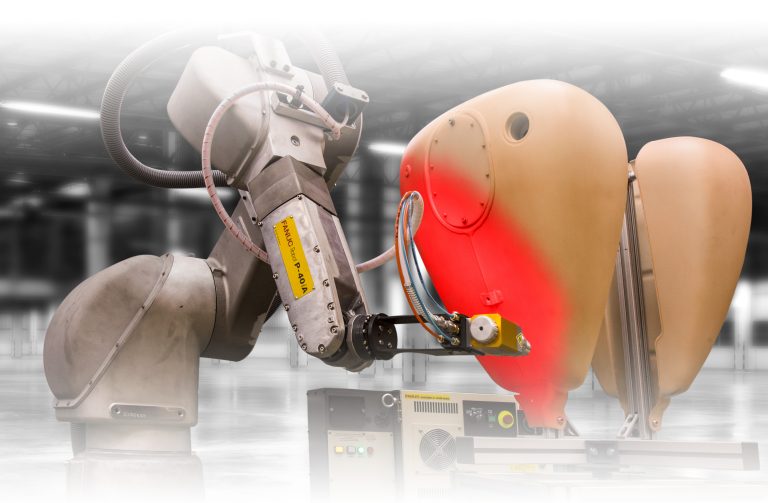
Image credit: automatedsolutions.com.au
A modern paint robot brings structured motion and programmable accuracy to applications that once depended on operator technique. Manufacturers remove inconsistencies, such as uneven film formation or excessive material consumption by automating spray path, speed, and application angles. This results in a consistent coating process that provides greater First Time Quality and reduced Rework.
Consistency and efficiency are essential to the measurement of results
The human factor or slight differences in technique can cause variations in the thickness and coverage of the manual paint. Paint robots eliminate this variability through the use of the same motion patterns in each cycle of production. This repetition level ensures a uniform surface finish, and an optimal distribution of the material on every part.
Advanced robotic paint systems also enhance transfer efficiency. Overspray of paint can be lessened when the distance as well as orientation between the applicator’s and component are maintained precisely. Reduced material waste leads to cost savings, while less emissions of volatile organic compounds help with the environmental compliance.
The integrated fluid handling in paint robotics guarantees precise mixing ratios for multi-component coatings. This prevents inconsistent coatings that cause damage to the finish. With the combination of stable flow control and programmable parameters, manufacturers can adjust atomisation and spray patterns settings in real time.
Productivity and safer work environments
Adopting a robot painter has substantial benefits in terms of increased efficiency. Paint cells that are robotic work all the time and with minimal interruption in contrast to manual processes. Once programmed, they provide steady throughput without the requirement to take breaks or be under constant supervision.
In the case of solvent-based or two-component coatings, safety concerns are crucial. Paint atomized may create hazardous situations, particularly when working with materials that are flammable or reactant. Modern paint robots are able to operate safely in difficult situations. This lowers the risk of exposure to chemicals that are harmful and improves safety at work.
Conveyor tracking technology also improves productivity by enabling robotic painting while the components are in motion. This capability expands the effective working envelope and keeps production lines running efficiently.
Australian Automation Expertise Supporting Industry
For companies looking to upgrade their finishing operations getting access to highly skilled automation partners is essential. Automated Solutions in Australia has earned a reputation of providing high-end robotic integration services. The team is well-versed in automation engineering, and is certified as FANUC robot integration experts. They help businesses implement robot paint solutions that are tailored to their requirements.
Through a combination of technical expertise and practical industry experience, Automated Solutions assists manufacturers in evaluating their current methods and conceiving the most efficient robotic paint cells. Facilities can gain an understanding of performance improvements through collaborative planning, simulation and system integration.
It’s not just about automatization. It’s about making tangible improvements in efficiency, quality and security. A well-designed paint robot system transforms surface finishing into a controlled efficient, repeatable, and economical process. Automation experts can assist companies in increasing their efficiency and competitiveness, as well as ensure longevity in a highly competitive market.